


- You are here:
-
Sights by Regions

-
Vinnytsia region
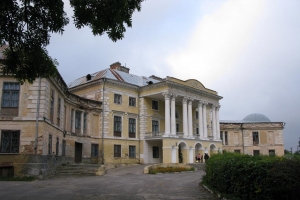
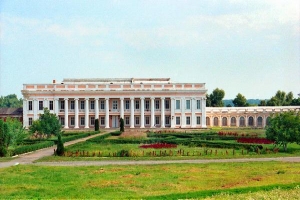
- Potocki Palace, Tulchin

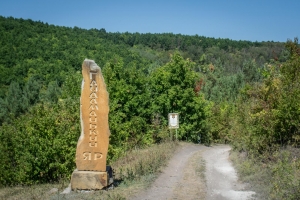
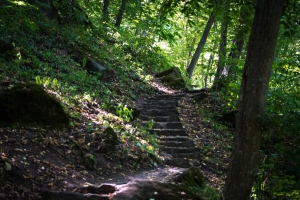



Centuries ago, haidamakas (Ukrainian peasant rebels who fought against Polish landlords and foreign oppressors) hid in this deep ravine, launching raids from its shadows. Sandstone cliffs as tall as apartment blocks, caves, secret paths above the river: you couldn’t design a better ambush spot. That’s where the name comes from.
Haidamatskyi Yar is a scenic canyon nature reserve near the village of Busha in Vinnytsia region — a place where wild nature, Cossack history and ancient legends have woven themselves into one unforgettable trail.
Location at a Glance
| Location | Busha village, Mohyliv-Podilskyi district, Vinnytsia region |
| What it is | geological nature reserve, rocky ravine |
| Area / length | 96 ha; ~2 km along the Bushanka river |
| Time needed | 2–3 hours |
| What to bring | comfortable shoes, water, camera |
What It Is — and Why Make the Trip
Haidamatskyi Yar is a geological natural monument of national significance, protected as a nature reserve since 1975. The landscape alone is striking: a deep, forested canyon carved by the Bushanka river, with massive sandstone cliffs rising on both sides.
People come for the combination of wild nature and layered history. There are hornbeams growing up to 30 metres tall, rare maples and alders, and fantastically shaped rocks with their own names — «Ram», «Mushroom», «Haidamatska» (complete with a cave) and others. Just nearby, in Busha itself, you’ll find fortress ruins, an ancient monastery and the famous carved rock relief. One route, several millennia.
Traces of Trypillian, Cherniakhiv and Cossack cultures have all been found in Busha. People have made this place home for millennia — the ravine simply kept them in its shadow.
History: The Ravine That Sheltered Rebels
The name tells the story: in the 18th century, haidamakas — fighters in the popular uprisings against Polish landlords, Tatar and Ottoman raiders — operated from these hills. The deep ravine with its cliffs and caves was a perfect hideout: rebels sheltered here and launched sorties from it.
But Busha’s history runs far deeper. The village preserves the ruins of a fortress that mounted a heroic defence during the Khmelnytsky Uprising (the great 17th-century Cossack rebellion that shook the Polish-Lithuanian Commonwealth), an ancient church, an old cemetery and an abandoned cave monastery. The centrepiece is the enigmatic carved rock relief in Busha, whose age and meaning scholars are still debating.
Legends and Local Lore
A place with this kind of history was always going to attract legends.
1. The Haidamaka Treasure
The most popular legend: somewhere in the ravine’s caves, the haidamakas buried the riches plundered from Polish landlords. Nobody has ever found the hoard — but treasure hunters still show up.
2. The Mystery of the Rock Relief
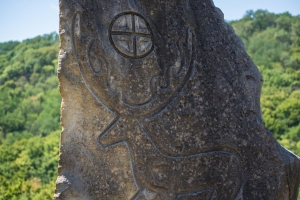
The famous bas-relief in Busha — depicting a human figure, a deer and a tree — remains an open question. Some scholars read it as pre-Christian and pagan; others argue it is early Christian. Each interpretation trails its own web of legends.
3. The Heroine of Busha’s Defence
Local accounts tell of Busha fortress’s courageous last stand, where women fought alongside men — and one defender chose to blow up the powder magazine rather than surrender to the enemy. A story that fills these cliffs with heroic resonance.
What to See and Do
Sandstone cliffs. Enormous formations with their own names — the undisputed highlight of the ravine.
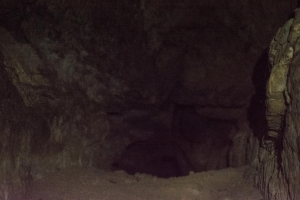
Caves. Including the cave inside «Haidamatska» rock — a wonderfully atmospheric spot for photos.
The rock relief and fortress in Busha. The historical leg of the route — too good to skip.
Walk along the Bushanka. A forested canyon with a river running through it — perfect for slowing down and taking it all in.
Getting There
By car. Head for the village of Busha in the south of Vinnytsia region, Mohyliv-Podilskyi district. The ravine starts at the edge of the village; the approach road is partly unpaved.
By public transport. Travel to Mohyliv-Podilskyi or Yampil, then take local transport or a taxi to Busha.
Combine with Busha. The Busha Historical and Cultural Reserve (fortress, rock relief, open-air museum) makes the perfect companion to the ravine.
Traveller’s Checklist
- Comfortable shoes: trails, rocks, uneven terrain throughout.
- Water and snacks: no facilities inside the reserve.
- Camera: the cliffs and canyon are extraordinarily photogenic.
- Torch: if you plan to peek into the caves.
What NOT to do: carve graffiti on the cliffs or the rock relief, litter in the nature reserve, or scramble onto wet or unstable boulders without good reason.
Frequently Asked Questions
Where does the name «Haidamatskyi Yar» come from?
In the 18th century, haidamakas — fighters in anti-landlord uprisings — hid here. The deep ravine with its cliffs and caves was their natural refuge.
What is there to see in Busha itself?
The ruins of a fortress from the Khmelnytsky Uprising era, the enigmatic rock relief, an ancient church, an old cemetery and cave monastery, and an open-air museum.
Is it suitable for families with children?
Yes, but keep the terrain in mind: the cliffs and trails require attention. For families, this is more of a discovery hike than an easy picnic outing.
Is it safe to visit during the war?
Vinnytsia region is a relatively rear area, but missile strikes are possible anywhere in Ukraine. Monitor air-raid alerts and the current situation before travelling.
Haidamatskyi Yar is Podillia at its wildest and most romantic: cliffs, caves, a river and the echo of Cossack freedom. A place where you hike through nature and walk through history at the same time.
Follow the trails, touch the cold sandstone, explore Busha with its fortress and mysterious relief — and you’ll understand why people have been drawn here for millennia. As for the haidamaka treasure: let it stay a legend. The real treasure here is the place itself.



JoomShopping Download & Support