


- You are here:
-
Sights by Regions

- Kharkiv region
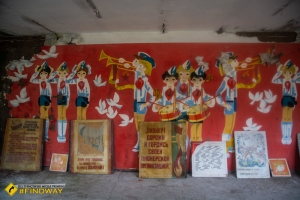
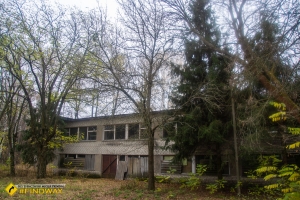

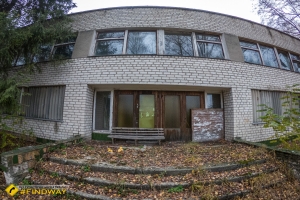

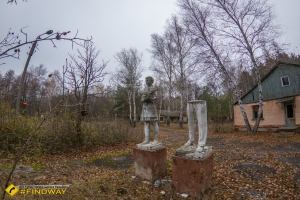


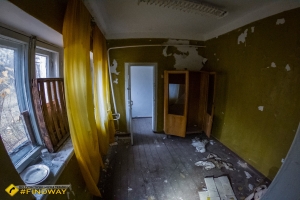
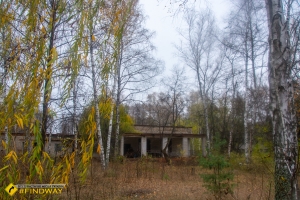
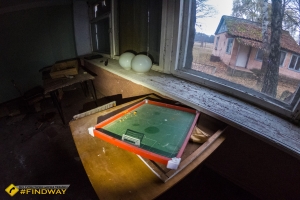
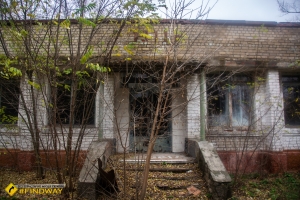
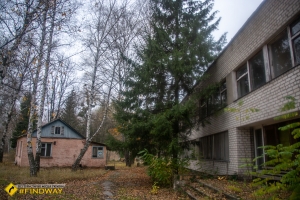
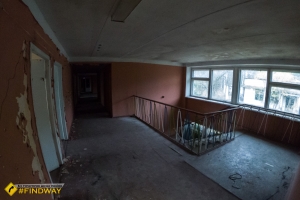
In a single Soviet summer, more children passed through "Sokil" than live in the entire village of Tymchenky today. Three shifts, full buildings, noise from dawn until lights-out.
Now it's cracks in the walls being counted, not children. "Sokil" is yet another abandoned Pioneer camp on the shores of the Pechenizke Reservoir — but with a face of its own: mosaics the forest hasn't managed to hide just yet.
Location card
| Location | near the village of Tymchenky, shores of the Pechenizke Reservoir, Kharkiv region |
| Distance | ≈ 50–60 km east of Kharkiv |
| Time needed | 1–1.5 hours |
| What to bring | sturdy shoes, a flashlight, water, a first-aid kit, caution |
What it is and why visit
"Sokil" is an abandoned Pioneer camp in a pine forest near Tymchenky, on the shores of the Pechenizke Reservoir. Unlike neighboring camps, this one is especially valued for its monumental decor: Soviet-era mosaics and reliefs that once adorned its buildings and clubhouse.
It's a find for those hunting not just for an "abandoned site," but for artifacts of an era: Pioneer symbolism, sports-themed reliefs, and ornamental patterns now reading almost like an accidental open-air gallery. The forest here plays the role of a reverse restorer — slowly but steadily erasing every human trace.
History
The pine belt along the Pechenizke Reservoir became a resort-and-camp zone for Kharkiv back in Soviet times. Factories and government agencies built health resorts here — and "Sokil" was one of them.
The camp's layout followed the standard formula of the era: dormitory buildings grouped by unit, a dining hall, a clubhouse with a stage, sports grounds, and an obligatory spot for the flag-raising assembly. All of it framed as "health improvement for workers' children."
The mosaic on the clubhouse facade was meant to be seen by generations of children. As it turns out, today it's photographers, in the emptiness, who study it the longest.
With the collapse of the USSR, the institutional health-resort system fell apart. Enterprises grew poorer, vouchers disappeared, and camps left without an owner gradually decayed. "Sokil" met the same fate — emptiness, and a forest reclaiming its territory.
Legends and lore
Like every abandoned camp, "Sokil" has gathered its own stories.
1. The eyes of the mosaic falcon
Visitors say the gaze of the bird depicted on the facade "follows" you. It's a classic optical effect of a front-facing image — but at dusk, among the empty buildings, it really is a bit unsettling.
2. The echo of the Pioneer bugle
Teenagers claim that in the silence you can hear an "echo of the morning assembly." The simplest explanation is wind and the acoustics of an empty dining hall. But the legend persists — it's more fun that way.
What to see on site
Mosaics and reliefs. This camp's main highlight. Soviet monumental decor slowly disappearing under moss and time.
The clubhouse and dining hall. The camp's largest buildings, with empty halls and a stage.
Pine-lined paths to the water. Trails to the reservoir's shore — a quiet, photogenic part of the walk.
Getting there
The most important note on status. The site is in the Kharkiv region, in the area of the Pechenizke Reservoir, close to the active conflict zone. The dam area has come under shelling, and mines or restricted-access zones are possible. This trip should be considered only after checking the current security situation — if there's any threat, do not go.
By car. Roughly: head east from Kharkiv to the Pechenizke Reservoir (50–60 km), then on toward Tymchenky. Access roads are unpaved forest tracks.
Route. Plan your route only using current, reliable sources; don't trust old waypoints in potentially mined terrain.
Traveler's checklist
- Check the safety situation in Kharkiv region and around the reservoir — the first item, no exceptions.
- Sturdy shoes and a flashlight — debris, dark buildings, pits.
- First-aid kit and water — no infrastructure nearby.
- Respect the site — don't damage the mosaics or decor, and don't take anything with you.
What NOT to do: enter structurally unsound buildings, chip off mosaic fragments as "souvenirs," or step off the trails in potentially mined forest.
Frequently asked questions
Is it safe to go there now?
Not without checking the situation first. The Pechenizke Reservoir area is close to active fighting and has come under shelling — that's the deciding factor.
What makes "Sokil" different from nearby camps?
Its monumental decor: this is the camp where Soviet-era mosaics and reliefs on the buildings and clubhouse are especially notable.
Can you bring children here?
No. Structurally unsound buildings, broken glass, and the risk of mines make this site unsuitable for children, even setting the war aside.
Have the mosaics survived?
Partly. Time, moisture, and vegetation are gradually destroying them, so fewer of these artifacts remain each year.
"Sokil" isn't just about empty buildings — it's about art that no one ever intended to become a museum piece. Soviet mosaics, designed as a backdrop for a Pioneer summer, have today become the main exhibit.
When Kharkiv region returns to peaceful life, these walls will still have their story to tell. For now, the wisest thing is to admire them from a distance and not hasten their decay with your own hands.
JoomShopping Download & Support
Attention! Part of Ukraine was occupied during Russia's unfounded military aggression against us and other democratic countries!
russia is a terrorist country, russians are murderers, thieves and rapists.
Russia's unhuman aggression against Ukraine since 2014 has led to the loss of homes and lives not only of many Ukrainians, but also of citizens of other countries and nationalities.
We consider any military actions against any state in the 21st century unacceptable and stupid, but unfortunately the Russians do not think so, and therefore many democratic countries, including Moldova, Georgia and our homeland, suffer from barbaric aggression.
Therefore, until the occupied parts of Ukraine are demilitarized and returned to our state, we remind users about the real danger of visiting the territories occupied by russia.